
If last Friday, November 6th, you were strolling down Sant Miquel Street in Manresa, you surely noticed a special atmosphere. At Vinalium Manresa we hosted our second Pop-Up Tasting of the Month, a day where wine, great company, and the thrill of discovering new oenological gems took center stage.
Between glasses, attention was stolen by a category as exclusive as it is fascinating: Vinos de Pago, and most notably a white wine that left everyone wanting more, the Cuesta del Herrero Chardonnay by Pago de Ayles.
If you couldn’t make it or simply want to relive those sensations and understand why this wine from Aragon has earned a place of honor on our shelves, you’ve come to the right place. In this article, we share the key secrets that make Vinos de Pago unique, break down the tasting notes of this marvelous white, and show you how to buy it directly from our online store, Wonderful Wines, to enjoy at home whenever you like.
What is a Vino de Pago and Why Does It Represent the Pinnacle of Quality in Wine?
To understand the true value of the bottle we uncorked at our second Pop-Up Tasting, we first need to look closely at the concept. Within the strict pyramid of wine classification in Spain, the highest quality distinction doesn’t belong to a large region or a general Designation of Origin (D.O.), but to a far more exclusive category: Vino de Pago.
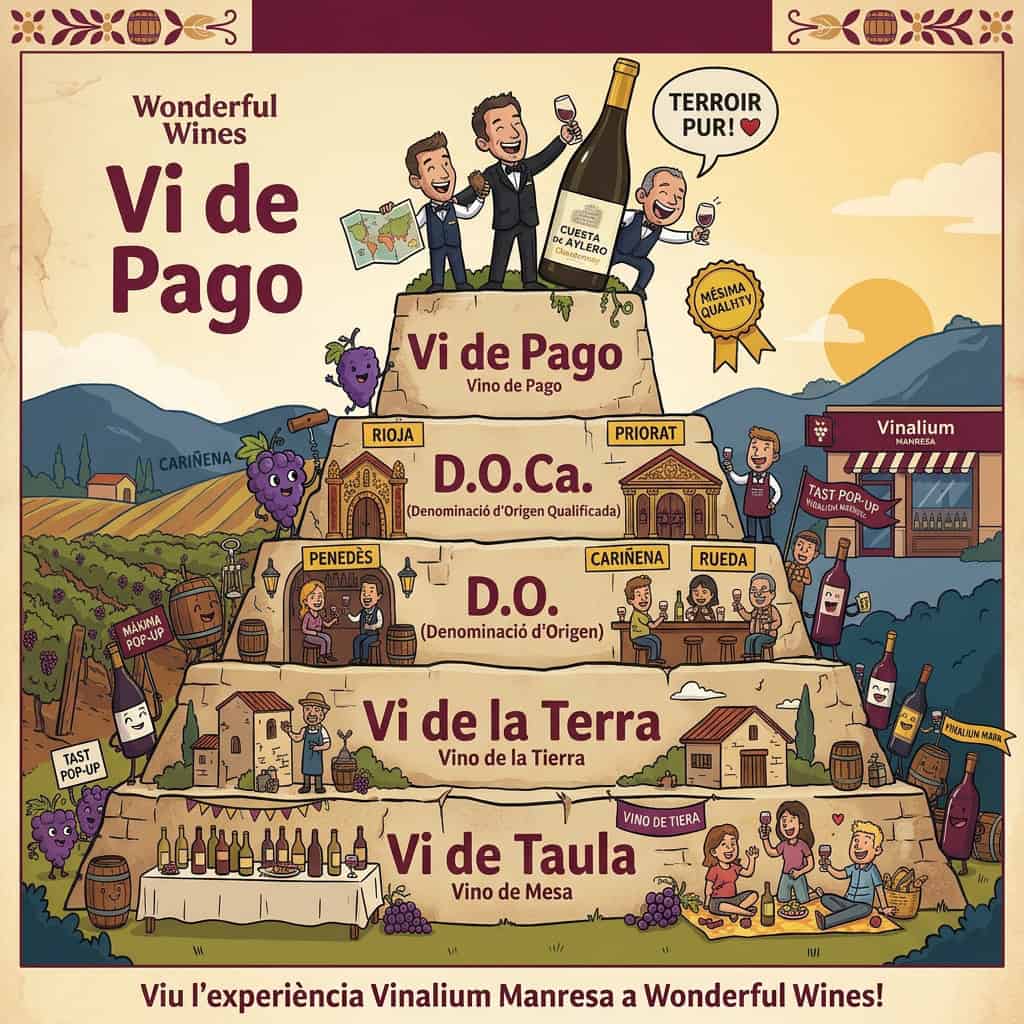
A Pago is not just a vineyard or a brand name; it is a legal and oenological designation connecting wine to its purest origin. For a terroir to carry this label, it must meet extremely demanding requirements:
🍇 Single, Delimited Origin: 100% of the grapes used must be grown exclusively within the strictly bounded geographic estate, featuring very specific soil and microclimatic conditions distinct from its surroundings.
🏰 Estate Winemaking: The entire process —from harvesting to fermentation, aging, and bottling— must take place strictly within facilities located inside or immediately adjacent to the estate.
🔍 Traceability and Superior Quality Control: The estate’s dedicated regulatory body applies analytical and organoleptic checks far stricter than those of any standard D.O.
🍷 Sommelier’s Note: To explain it simply to our store customers: if a Designation of Origin (such as Priorat or Penedès) equals an entire wine region, a Vino de Pago is the equivalent of a Burgundian Grand Cru or a walled vineyard (clos), where every single vine expresses the exact personality of that specific parcel of land.
Pago de Ayles: Aragon’s Pioneer and a Unique Terroir
If the Vino de Pago concept represents the peak of quality, Pago de Ayles is undoubtedly one of its brightest jewels. Located in Mezalocha, in the heart of Aragon (near Zaragoza), this estate is not just a winery; it is an entire ecosystem dedicated to winemaking excellence with a history dating back to the 12th century.
So, what makes Pago de Ayles so special? In 2010, it marked a turning point in the region’s winemaking history by becoming the first Vino de Pago in Aragon and one of the very first in all of Spain. This recognition was no coincidence, but the result of total commitment to the land and a terroir seemingly tailored for signature wines.
Keys to Its Personality: Sun, Wind, and Altitude
For those of us lucky enough to taste their wines during the Pop-Up Tasting at Vinalium Manresa, the character of Ayles is unmistakable. This unique terroir rests upon an oenological golden triangle:
⛰️ “Cascajo” Soils: The estate is set over an ancient riverbed filled with pebbles and stones (known locally as cascajo). These stones absorb solar heat during the day and release it to the vines at night, fostering optimal ripening and a distinctive minerality.
🌬️ The Cierzo Wind: This cold, dry northwestern wind blows strongly through the Ebro Valley. The Cierzo acts as a “natural sanitizer,” keeping vines free from disease and fungi naturally and allowing for far more sustainable viticulture.
❄️ Altitude & Thermal Contrast: Located at roughly 700 meters above sea level, the estate experiences significant temperature shifts between warm days and cool nights. This slows grape ripening, preserving vibrant natural acidity and aromatic complexity.
💡 When we taste a Pago de Ayles wine, we aren’t just tasting wine. We are tasting the history of a 12th-century castle, the strength of the Cierzo wind, the ruggedness of stony soils, and the passion of a family dedicated to extracting the purest essence of this high-altitude terroir.
Cuesta del Herrero Chardonnay: The White Wine That Surprised Vinalium Manresa
We reach the climax of our story, the bottle that drew every eye (and emptied fast!) during the second Pop-Up Tasting by Wonderful Wines at Vinalium Manresa: Cuesta del Herrero Chardonnay, Pago de Ayles’ freshest and most vibrant take on the world’s most famous white grape variety.
If Cabernet Sauvignon is the undisputed king of red wines in cinema, Chardonnay is undoubtedly the absolute queen of whites. However, Cuesta del Herrero flips the script completely. Forget everything you thought you knew about this variety —heavy, overly oaked, or dense whites— because Ayles offers a refreshing plot twist: a masterclass in freshness, minerality, and elegance that will make you fall in love with Chardonnay all over again.
Tasting Notes: Elegance, Complexity, and Vibrant Acidity
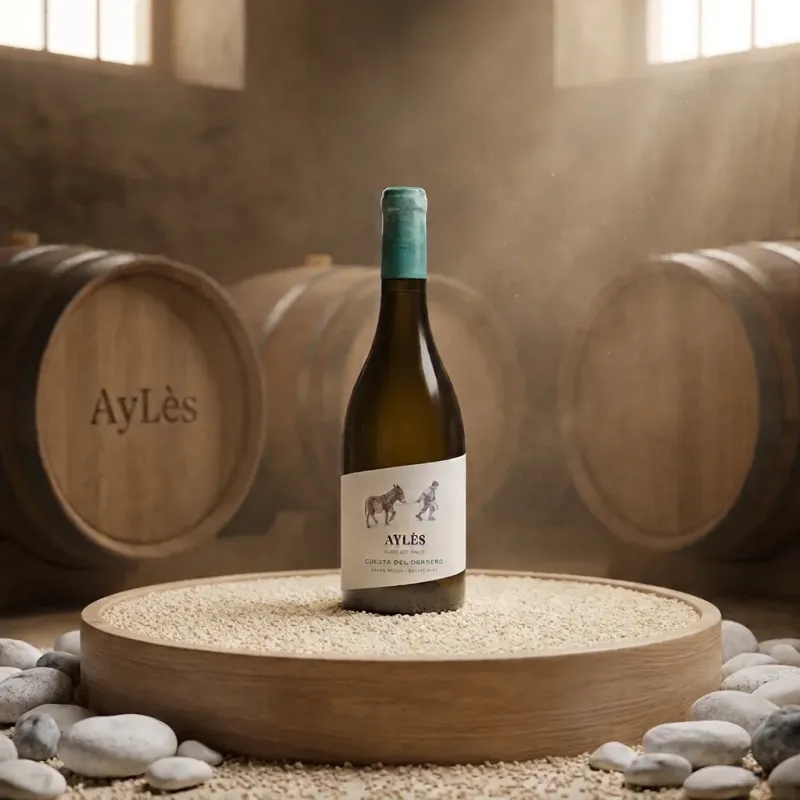
Before pouring the first glass of Cuesta del Herrero Chardonnay, it helps to understand what makes it so distinctive within Pago de Ayles’ lineup. This wine is no happy accident; it stems from a specific plot on the estate where high altitude and microclimatic cool breezes allow Chardonnay to express itself without the heaviness found in warmer regions.
Crafted through careful aging on fine lees alongside a subtle touch of French oak barrels, the result is a white wine with immense character: keeping crisp fruitiness intact while revealing a smooth, complex texture and creamy mouthfeel right from the first sip.
When we uncorked the bottles at the Manresa shop, its bright straw-yellow color with greenish glints instantly caught everyone’s eye, signaling its intense freshness.
On the nose, it evolves beautifully. It opens with an explosion of white and stone fruit (green apple, peach) coupled with citrus nuances (lemon peel, orange) and a subtle mineral backbone typical of Ayles’ stony cascajo soils. Given time in the glass, white floral notes emerge alongside delicate brioche and toasted nut undertones.
Two Bold Food Pairings for a Successful Tasting at Home
If you’ve attended any of our tastings at Vinalium Manresa, you know we avoid boring, standard food pairings. The versatility, freshness, and creamy structure of Cuesta del Herrero Chardonnay by Pago de Ayles make it an extraordinarily fun wine to experiment with in the kitchen.
Here are the two culinary creations we featured at our store that you can easily recreate at home to impress your guests:
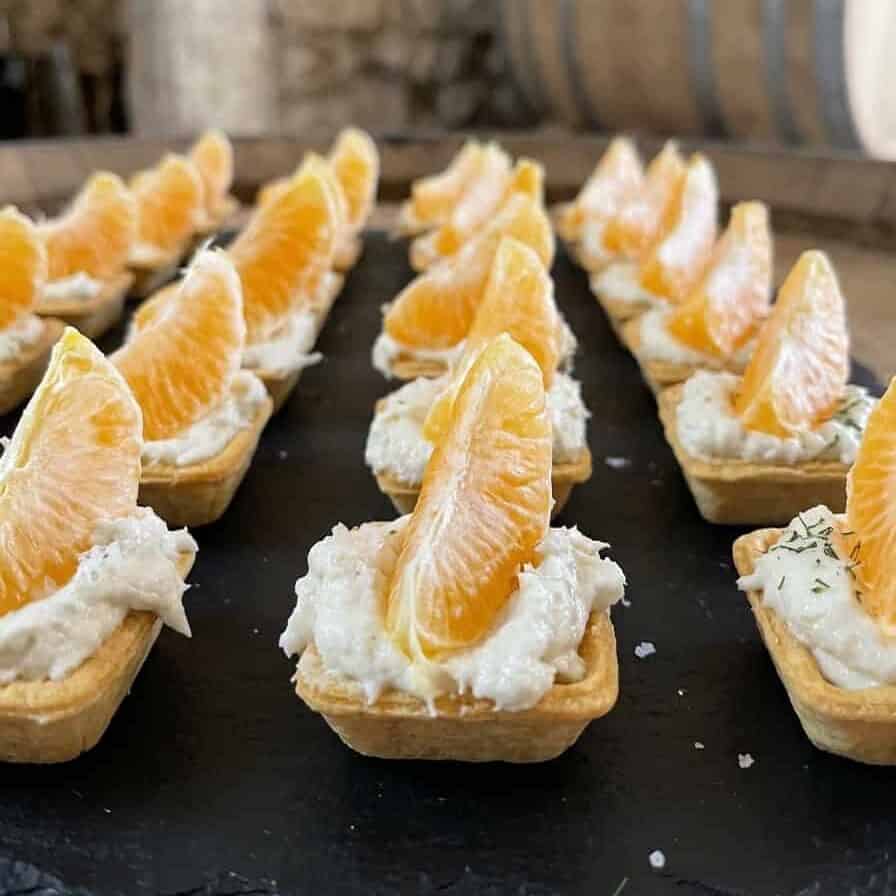
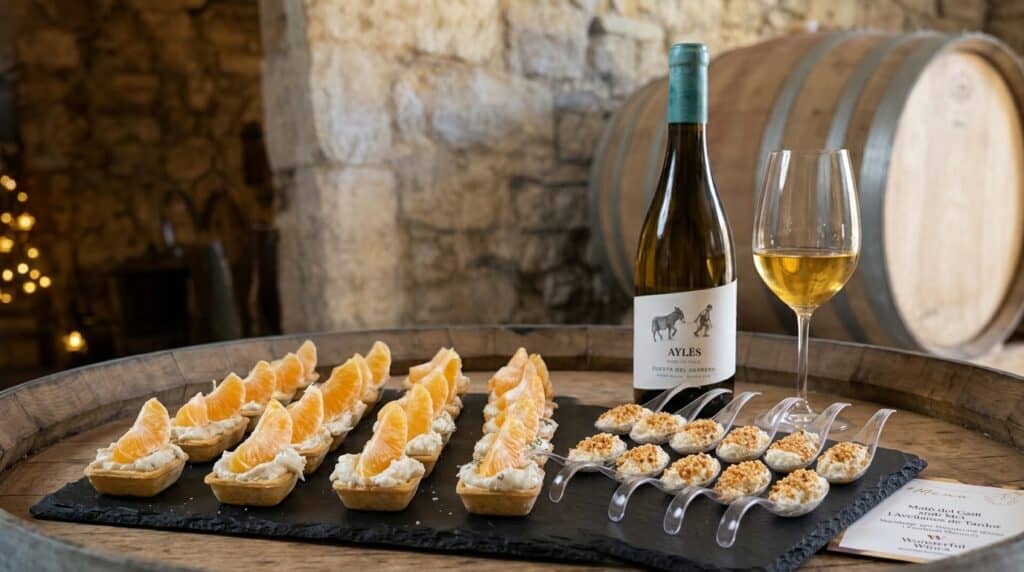
🍊 Salt Cod Brandade Tartlet with Mandarin Segment
The Pairing: This was without a doubt the boldest combination of the evening, enthusiastically praised by our guests last Friday.
Why does it work? On one hand, the creamy texture of the cod brandade finds its perfect match in the wine, as its lees aging and subtle French oak maturation deliver structured body capable of embracing the fish’s rich texture. On the other hand, the mandarin provides a stroke of genius: the vibrant citrus acidity instantly cleanses the palate, leaving it completely refreshed for the next bite. An unforgettable play of contrasts!
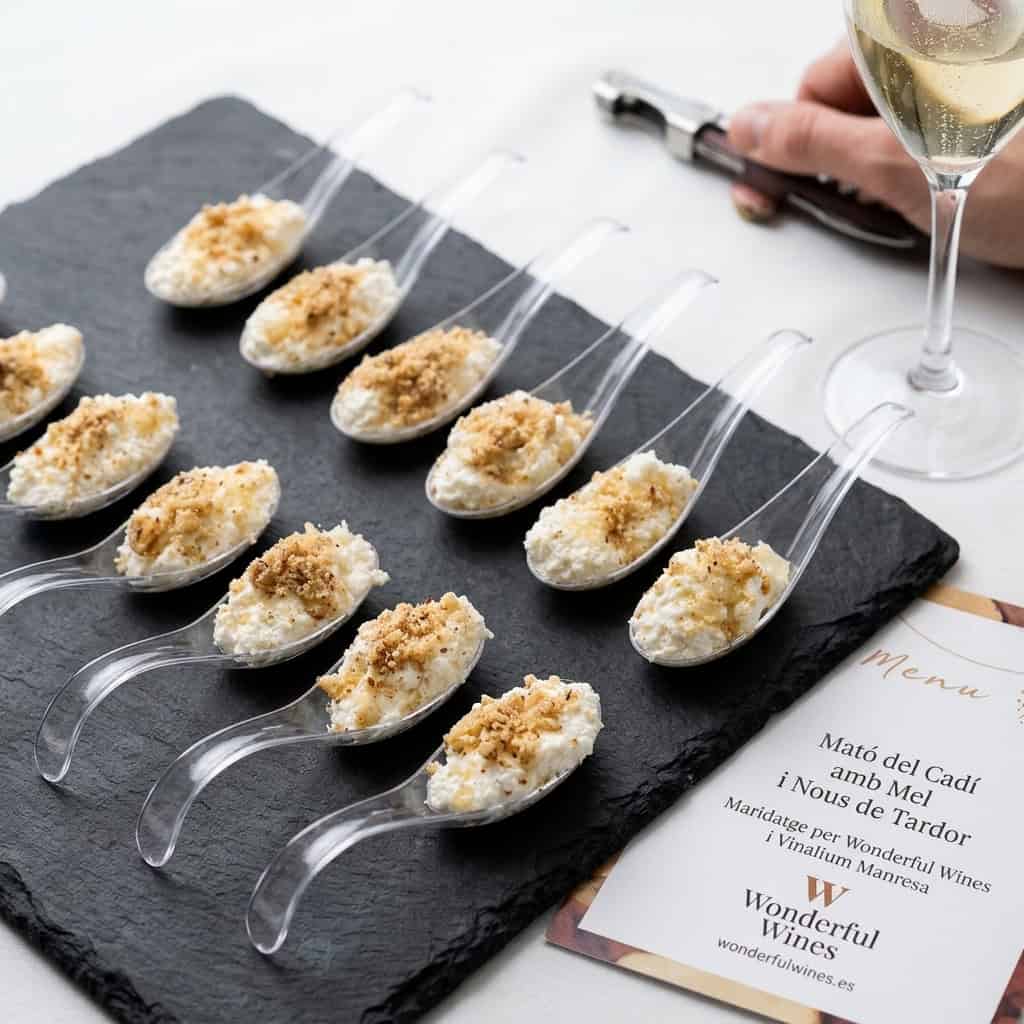
🍯 Mató del Cadí Fresh Cheese Spoon with Wildflower Honey and Crushed Hazelnuts
The Pairing: Who says white wine can’t accompany dessert? We suggested extending this Chardonnay through to the end of the meal with a classic local cheese served as an express tasting bite.
Why does it work? The delicate creaminess of Mató D.O.P. Cadí cheese and crunchy roasted hazelnuts harmonize wonderfully with pastry and nutty aromas derived from barrel fermentation and lees. And the secret to this harmony? Don’t overdo the honey. A subtle drizzle of wildflower honey adds just enough sweetness so the wine’s natural acidity and crispness aren’t overwhelmed, achieving a striking balance between sweet and fresh notes.
🍷 Sommelier’s Note: Pro tip: Serve the wine around 8-10 °C (46-50 °F). If served ice-cold straight from a 4 °C fridge, you will mute both the fine fruit/oak aromas and the velvety texture that pairs so well with both cod brandade and fresh cheese.

🎶 Musical Pairing: Enya & Paint the Sky with Stars
The Pairing: Once the Chardonnay opened up in the glass at Vinalium Manresa, we dimmed the lights slightly and allowed Enya’s ethereal vocals and atmospheric soundscapes to guide the tasting moment.
Why does it work? Enya’s music possesses a unique ability to transport you to wide, pristine natural landscapes —mirroring Pago de Ayles’ high-altitude terroir and stony cascajo soils. The volume and creaminess from lees aging and French oak resonate with the deep, layered vocals of the album, while the wine’s vibrant mineral acidity echoes the luminosity of the melodies. A sensory journey where time stands still!
🍷 Sommelier’s Note: Pro tip: Try playing this album at home while opening a bottle of Cuesta del Herrero Chardonnay. Close your eyes on your first sip and embrace the synesthesia: you’ll feel the wine expand even further across your palate.
Relive the Magic of the Tasting at Home or at Vinalium Manresa
Our second Pop-Up Tasting of the Month at Vinalium Manresa reaffirmed why we love wine culture: warm encounters, shared laughter, surprising gastronomic discoveries, and the pleasure of uncorking exceptional bottles like those from Pago de Ayles.
If you missed out or want to enjoy this extraordinary Chardonnay once more, it’s just a click away. We deliver it straight to your doorstep from our online store for any special occasion.
👉 Get your Cuesta del Herrero Chardonnay at Wonderful Wines
Be sure to follow our social channels and blog: very soon we will announce the date and featured winery for our next Pop-Up Tasting at Vinalium Manresa. We look forward to seeing you with glass in hand!
Frequently Asked Questions (FAQ)
What is the difference between a Vino de Pago and a Designation of Origin (D.O.)?
While a standard D.O. covers hundreds of wineries across a wide region under general guidelines, a Vino de Pago is Spain’s highest quality classification. It guarantees that the wine is produced and bottled exclusively from grapes grown on a single estate (terroir) featuring unique microclimate and soil conditions.
Is a Vino de Pago the same as a Vi de Finca?
They are closely related concepts, but differ in key regional and legal nuances. Both represent the absolute pinnacle of quality and terroir expression, ensuring that the wine is produced exclusively from a single exceptional vineyard with distinct characteristics.
The main difference lies in administration: Vino de Pago is a nationwide Spanish legal status (such as Pago de Ayles in Aragon) where the estate operates as its own independent D.O. On the other hand, Vi de Finca Qualificada is the highest recognition granted in Catalonia for prestigious top-tier wines that remain within their regional Catalan D.O. umbrella (such as Abadal 3.9 in DO Pla de Bages). To learn more about these iconic Catalan wines, check out our post explaining everything about Vins de Finca.
What is the ideal serving temperature for Cuesta del Herrero Chardonnay?
We recommend serving it between 8 °C and 10 °C (46-50 °F). Serving it too cold (below 6 °C / 42 °F) can mute delicate white fruit notes and the subtle elegance of lees and French oak aging.
Can this wine be aged, or is it meant for immediate consumption?
Cuesta del Herrero Chardonnay is ready to enjoy right away thanks to its crisp freshness. However, due to its impressive structure, lees aging, and natural acidity, it holds a fantastic aging potential of 2 to 3 years in the bottle.
Leave a Reply