
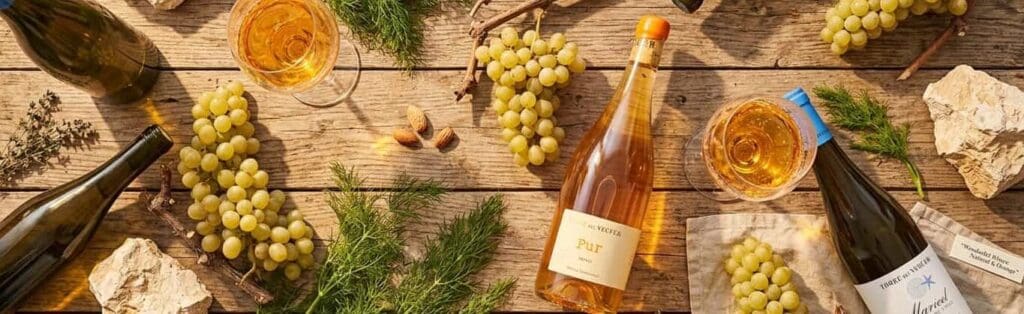
On October 16th, we experienced an evening to remember at Vinalium Manresa. We were joined by our friends from Torre del Veguer, a winery located in the Garraf Massif that we have long admired for its steadfast commitment to sustainable viticulture, biodiversity, and minimal intervention. Between glasses and discussions about their passionate work along the Mediterranean coast, one thing became crystal clear: curiosity about natural wines, orange wines, and minimal intervention winemaking keeps growing every day.
However, alongside this growing curiosity, we also notice plenty of confusion. Are they just a passing trend? Are organic, biodynamic, and natural wines the same thing? Do low-sulfite wines always have flaws, or is that simply a myth?
If you have ever asked yourself these questions or are looking to buy natural and minimal intervention wines with complete confidence in their quality, you have come to the right place. Today we explain everything you need to know about this winemaking philosophy, breaking down key concepts without pretension and using authentic projects like Torre del Veguer as our reference point.
Sorting out the concepts: What exactly is minimal intervention, natural wine, and Orange Wine?
To understand why wines like those from Torre del Veguer possess such purity and expression of the Garraf Massif, we first need to clarify the terminology. Wine concepts are often mixed up, making it easy to get lost.
1. Minimal Intervention Wine: Utmost respect for the vineyard and fruit
When we speak of minimal intervention (or low intervention), we refer to a working philosophy applied both in the vineyard and in the cellar. The winemaker’s primary goal is to let the grape express itself without disguise.
In the vineyard: Synthetic chemical pesticides and herbicides are avoided entirely. Soil biodiversity and natural biological cycles are strictly respected.
In the cellar: Additives and drastic processing techniques are kept to an absolute minimum. Fermentations rely on native wild yeasts, and harsh clarification or filtration methods are avoided to preserve natural aromatics and texture.
2. Natural Wine vs. Organic & Biodynamic Wine: They are not identical
This is the most frequent question we hear at our Manresa shop. While all three share eco-friendly values, key differences exist:
Organic Wine: Guarantees that grapes were grown without synthetic chemicals. However, official regulations still allow specific cellar additives and moderate sulfite levels for stability.
Biodynamic Wine: Follows biodynamic principles (viewing the vineyard as a living organism connected with cosmic and lunar cycles). Natural preparations are used to nourish soil vitality.
Natural Wine: Takes things a step further. Starting with organic or biodynamic grapes, nothing is added and nothing is removed during winemaking. This includes adding zero sulfites (or infinitesimal amounts right before bottling) and omitting filtration.
3. Orange Wines (Skin-Contact Wines): A return to ancient origins
Orange wines have nothing to do with citrus fruit. They are essentially white wines crafted using red winemaking techniques.
While traditional white wines press grapes immediately to ferment juice alone, an orange wine ferments juice together with grape skins and seeds for days, weeks, or months. This extended skin contact delivers:
- A distinctive amber or deep orange hue.
- Enhanced body, structure, and subtle tannic texture on the palate.
- Complex aromas of dried fruit, dried apricots, Mediterranean herbs, and subtle spice notes.
Tasting Insight: During our October 16th tasting, we saw how the natural salinity and mineral limestone soils of Garraf mesh perfectly with this method, yielding white and skin-contact wines of exceptional elegance and freshness.
Torre del Veguer: The essence of Garraf bottled with care
Understanding these wines requires appreciating their place of origin. Torre del Veguer is an estate nestled between Sant Pere de Ribes and Vilanova i la Geltrú, a unique setting where vines grow in direct proximity to the Mediterranean Sea and limestone rock of the Garraf Massif.
At our tasting event, we saw firsthand how this winery blends century-old history with modern ecological sensitivity. Their ethos centers on nurturing soil biodiversity, recovering native grape varieties, and honoring fruit purity. When raw grapes reach this level of quality, artificial cellar corrections become unnecessary: the fruit speaks clearly in every glass.
1. Torre del Veguer Fonoll
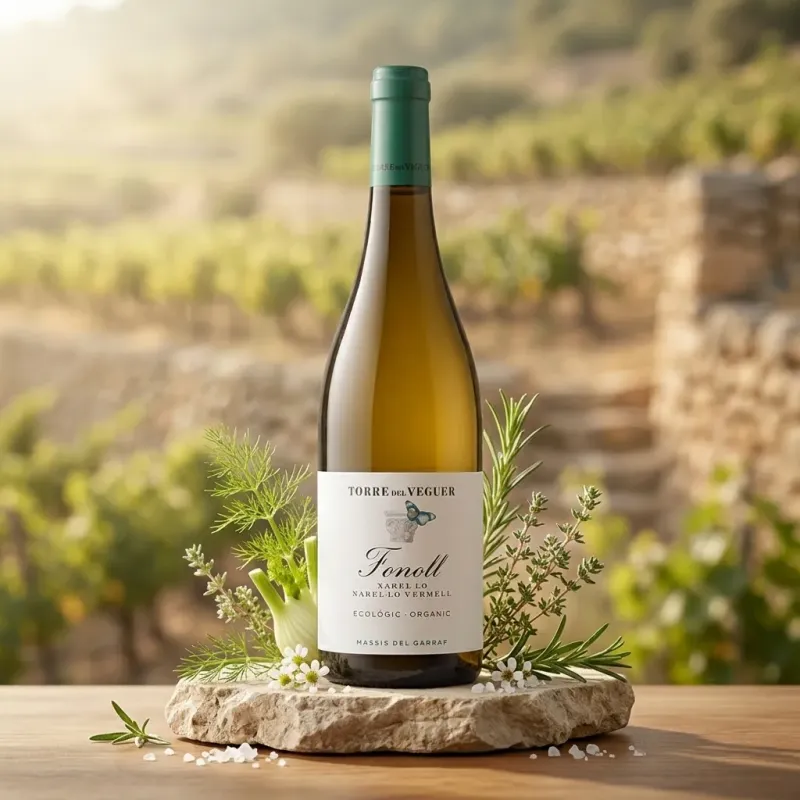
📌 Quick Facts: DO Penedès | Xarel·lo & Xarel·lo Vermell | 11.97% ABV
Philosophy Alignment: Fonoll perfectly mirrors our respect for terroir. Grown through certified organic viticulture, the winery practices strict minimal intervention. Crucially, it undergoes 3 months of lees aging inside clay ceramic amphorae—an ancient technique that preserves pure fruit character while allowing the wine to breathe naturally.
Tasting Notes: Bright lemon yellow in color. On the nose, it calls to mind a stroll through a coastal Mediterranean forest, displaying vibrant notes of fresh wild fennel, rosemary, and clean balsamic undertones. On the palate, lees and amphora aging provide ample volume, balanced by crisp acidity and a distinct saline mineral finish recalling its proximity to the sea (located just 4 km from the coast!).
💡 Bold Food Pairing: Step away from routine pairings and try it alongside fresh oysters, grilled red prawns, or creamy cheeses like Brie. Its vibrant freshness and delicate salinity revive the palate effortlessly.
2. Torre del Veguer Maricel
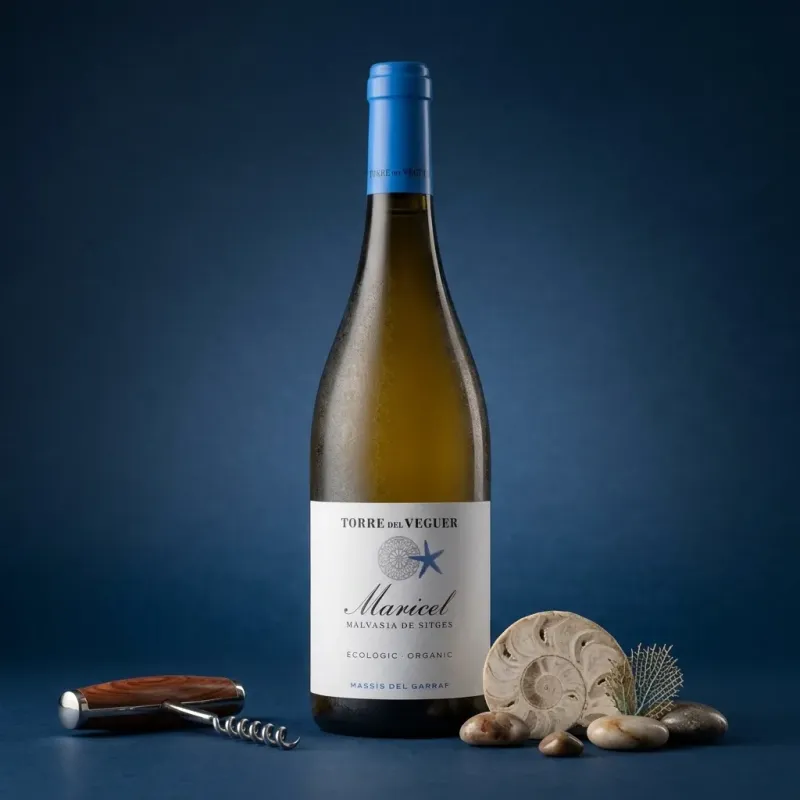
📌 Quick Facts: DO Penedès | 100% Malvasia de Sitges | 12.71% ABV
Philosophy Alignment: Maricel is a true celebration of an iconic historic grape: Malvasia de Sitges. Sourced from organic vineyards, it honors natural varietal character. Its signature texture comes from 4 months of lees aging in French oak barrels—a careful process where low intervention lets Garraf terroir shine through.
Tasting Notes: Luminous pale yellow with gentle greenish highlights. The nose reveals rich intensity, combining fresh stone fruit like white peach, tropical lychee notes, and aromatic wild herbs (fennel, rosemary). Juicy and smooth upon entry, it unfolds impressive freshness and persistence gained from fine French oak lees aging.
💡 Bold Food Pairing: Pair it with seafood noodles featuring mild spice or aromatic Asian cuisine (such as Thai green curry). Its crisp acidity cuts through richness to lift every bite.
3. Torre del Veguer Pur
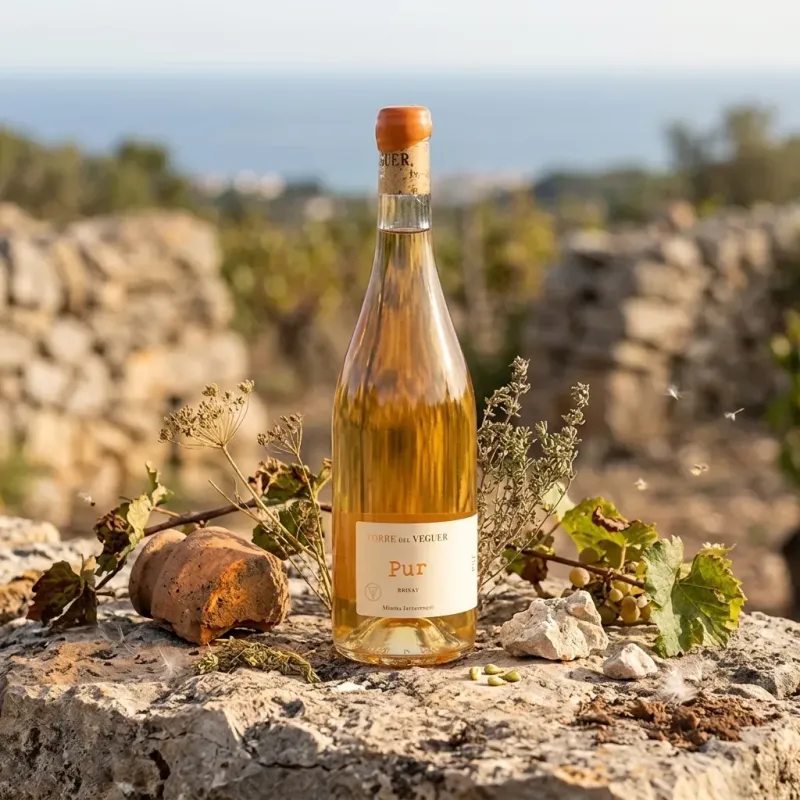
📌 Quick Facts: DO Penedès | 100% Malvasia de Sitges | 11.33% ABV
Philosophy Alignment: Pur pushes minimal intervention to its most uncompromising level. Crafted from organic Malvasia de Sitges, nothing is added or taken away: it ferments spontaneously with native yeasts, undergoes 2 to 3 weeks of extended skin maceration, ages 3 months in amphorae, and is bottled unfiltered, unfined, and with no added sulfites. Pure Garraf expression in a glass.
Tasting Notes: Striking deep amber in color. Complex aromas recall hops, candied orange peel, and dried Mediterranean herbs. On the palate, skin contact delivers rich texture, pleasing weight, and subtle tannins that give remarkable structure.
💡 Bold Food Pairing: Thanks to its rich structure, Pur steps beyond conventional white wine pairings. It pairs wonderfully with fatty fish like tuna or salmon, rich poultry (duck or game), or traditional braised dishes.
Beyond the tasting: Bring the spirit of Garraf to your home
Our October 16th event with Torre del Veguer confirmed once more that natural wines, orange wines, and low intervention winemaking are far more than a passing trend. They represent a deep respect for natural viticulture—seeking authenticity, landscape, and real emotion in every sip.
From the gentle, herbal freshness of Fonoll to the seductive complexity of Maricel and the uncompromising purity of Pur, these wines prove that quality and minimal intervention go hand in hand.
If you are eager to experience these unique wines and discover how coastal limestone soils translate into the glass, we invite you to explore our selection.
👉 Discover our natural and minimal intervention wine selection at Wonderful Wines
Frequently Asked Questions about natural wines, orange wines, and minimal intervention
1. What is the actual difference between natural wine and organic wine?
Although frequently confused, the difference lies in cellar practices. Organic wine certifies that grapes were grown without synthetic chemicals, but allows specific additives and moderate sulfites during winemaking. By contrast, natural wine avoids chemical interventions, commercial yeasts, harsh filtration, and adds zero (or minimal) sulfites.
2. Do orange wines taste like orange fruit?
No, not at all! The name refers solely to their amber color, obtained by macerating white grape juice with skins during fermentation. While this adds depth, tannins, and structure, aromatics lean toward dried fruit, spice, and herbs rather than fresh orange juice.
3. Is it true that natural wines always have off-flavors or flaws?
This is an outdated misconception from early experimental winemaking. Modern artisan producers like Torre del Veguer demonstrate that meticulous hygiene and cellar precision yield pristine, stable wines full of personality without defects.
4. How should minimal intervention wines be stored at home?
Just like any fine wine, but with extra care regarding temperature fluctuations. Because sulfites are absent or minimal, store bottles in a cool, dark place at a stable temperature (14–18 °C). Once opened, use a vacuum stopper to preserve freshness overnight.
5. Are all Orange Wines natural wines?
Not necessarily. An orange wine describes a winemaking method (skin-contact white wine), whereas “natural wine” denotes a low intervention philosophy. While many orange wines are natural (such as Torre del Veguer’s Pur), a producer could theoretically make an orange wine using added sulfites or filtration.
Sommelier Tips: How to best enjoy natural and orange wines
Working with low intervention and skin-contact wines is a joy, though they benefit from slightly different care than commercial wines. Àngel, our sommelier, shares three essential tips to get the best out of every bottle:
- Do not serve them ice-cold: Serving white and orange wines too cold suppresses delicate aromas. Orange wines like Pur or amphora-aged wines like Fonoll express far better slightly cool, between 12 °C and 14 °C. Let them rest in the glass a few minutes after taking them out of the fridge.
- Let them breathe: With minimal or zero added sulfites, these wines blossom when exposed to air. Uncork the bottle 30 minutes before serving or use a large Burgundy-style glass to appreciate their evolving aromas.
- Pair them with flavorful dishes: Orange wines possess the structure and tannins to complement spiced cuisine, roasted white meats, and rich savory dishes. Do not hesitate to experiment at table!
Leave a Reply