
Autumn’s arrival brings a special magic. Changing leaves, the fresh breeze, and the unmistakable scent of roasted chestnuts on the street invite us to seek cozy moments at home. Whether you are celebrating traditional Castanyada or joining in on Halloween night, there is one element that simply cannot be missing from your table: a good glass of sweet wine.
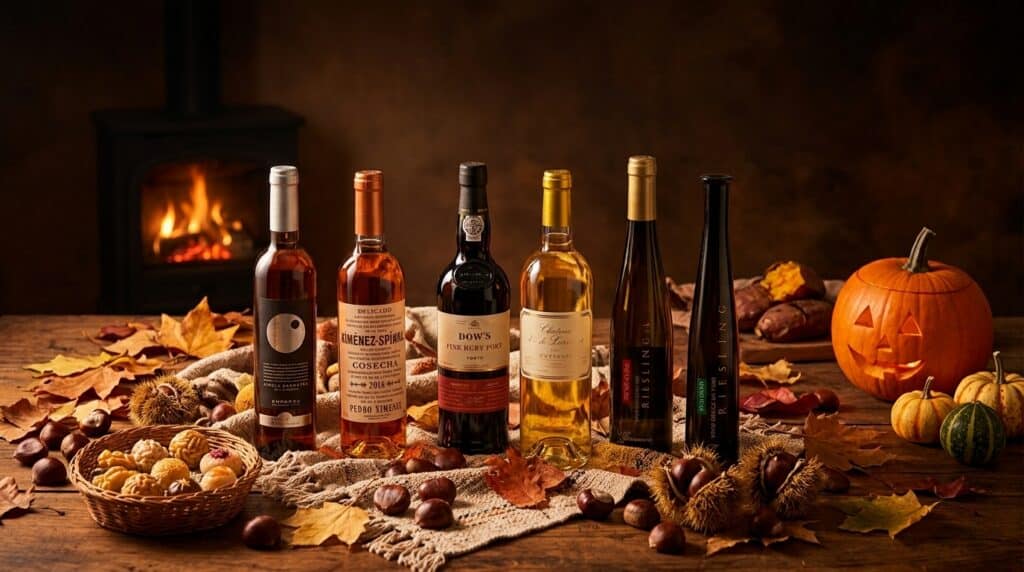
At our Wonderful Wines shop (and when we assist you in person at Vinalium Manresa), many of you ask us: “What is the best sweet wine for Castanyada?” or “Are all sweet wines the same?”. The short answer is no: from traditional sacramental or Muscat wines to the most elegant fortified or botrytized options, the world of sweet wines is as vast as it is fascinating.
In this guide, we explain the different types of sweet wines, how to pair them with the best autumn products, and how to choose your ideal bottle to enjoy or give as a gift.
What exactly is a sweet wine and how is it made?
To understand a sweet wine, we first need to know where its sugar comes from. Unlike what many believe, quality sweet wines never have external sugar added. All the sugar comes directly from the grapes.
While in a “normal” wine yeasts consume all the sugars in the must turning them into alcohol during fermentation, in the production of sweet wines this process is stopped earlier (or grapes with such a high sugar concentration are used that the yeasts cannot consume it all).
The result is a wine with a natural balance between alcohol, residual sugar density, and crisp acidity that keeps it from becoming cloying.
The main types of sweet wines you should know
When choosing a sweet wine for autumn or for online shopping, you will find different categories depending on their production method and grape origin:
Natural sweet wines (or late harvest)
These are wines made from grapes left to overripen on the vine longer than usual. By losing water, sugars and aromas concentrate naturally.
Classic example: Small-grain Muscats or Sweet Garnatxa from Empordà and Priorat.
Aroma and taste: Notes of honey, very ripe stone fruits (apricot, peach), and white flowers.
Our selection: SINOLS GARNATXA DE L’EMPORDÀ
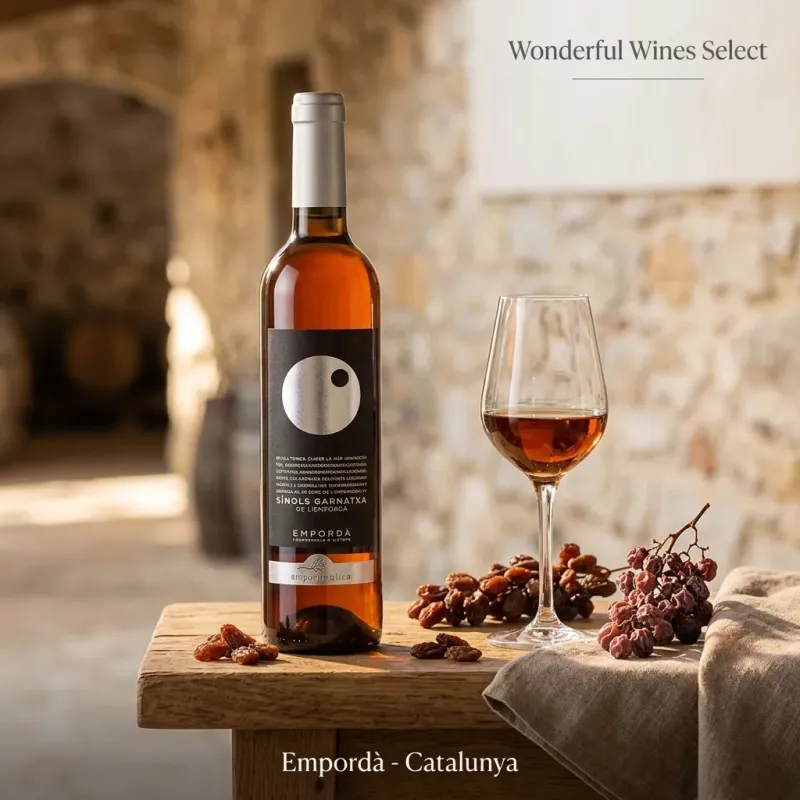
The star pairing: Pine nut, almond, and coconut panellets. The wine’s honeyed richness embraces the marzipan and intensifies the toasted notes of the pine nuts.
An emblematic natural sweet wine from Empordà, born from old Garnatxa Roja and Negra vines beaten by the Tramontane wind. It captures the Mediterranean essence and winemaking tradition of the region in a perfect balance of richness, warmth, and freshness.
In the glass, it presents an intense, brilliant **dark amber color with mahogany reflections** and a dense tear. On the nose, deep aromas of **dried fruit (figs, raisins, and dried apricots)** stand out, with honeyed touches, bitter orange marmalade, and backgrounds of toasted oak and sweet spices. On the palate, it is **mellow, broad, and enveloping**, with a natural sweetness impeccably balanced by good acidity that keeps it fresh and far from cloying, leaving a long, persistent finish with hints of pine nuts, honey, and candied fruit.
Other autumn options: An excellent companion for a slice of blue cheese or cured goat’s milk cheeses, carquinyolis, or desserts made with dark chocolate and orange mousse.
Straw wines or Passito (Dried grapes)
In this case, the grapes are harvested at their optimal ripeness point and left to dry on straw mats or in ventilated enclosures before being pressed.
Aroma and taste: Aromas of raisins, dried figs, nuts, and jam. A spectacle of density and depth.
Our selection: Ximénez-Spinola PX Delicado
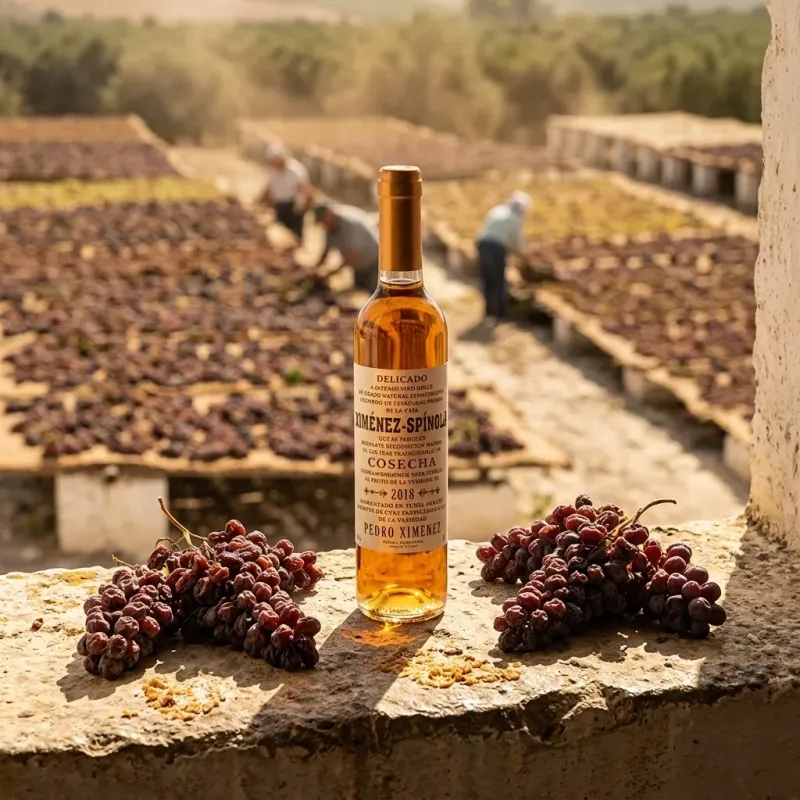
A true oenological jewel from one of Jerez’s most iconic wineries, specialized exclusively in the Pedro Ximénez variety. This sweet wine is made from sun-dried grapes (asoleo) and undergoes aging in American oak casks. It stands out for being an extraordinarily elegant PX, where natural sweetness harmonizes with surprising acidity and a finesse that makes it unique in its category.
In the glass, it displays a beautiful **dark amber color with golden and caramel highlights**, dense and brilliant in appearance. On the nose, it offers an exquisite and very complex aroma featuring notes of **raisins, dried figs, and prunes**, intertwined with nuances of forest honey, roasted coffee, dark chocolate, and a subtle background of oak and cinnamon. On the palate, it is **smooth, velvety, and deeply balanced**, with a very persistent honeyed sweetness offset by flawless freshness and acidity that prevents any cloying sensation, leaving a long, elegant aftertaste of toasted nuts and caramel.
The star pairing: Baked sweet potato with honey and cinnamon or chocolate, cocoa, or coffee panellets. The wine’s concentrated toasted and raisin notes fit perfectly with the roasted sweetness of sweet potato and the bitter edge of cocoa.
Other autumn options: It is a sublime combination with intense blue cheeses (like Cabrales or Roquefort), or simply to be enjoyed on its own as dessert alongside a slice of pumpkin pie or dark chocolate cake.
Fortified or dessert sweet wines
These are wines to which pure grape spirit is added during fermentation to halt it, thereby preserving a large portion of the must’s natural sugar.
Renowned examples: Port (Tawny or Ruby), Jerez Pedro Ximénez (PX), or Madeira wine.
Aroma and taste: Highly complex, with backgrounds of chocolate, coffee, toasted wood, and nuts.
Our selection: DOW’S FINE RUBY
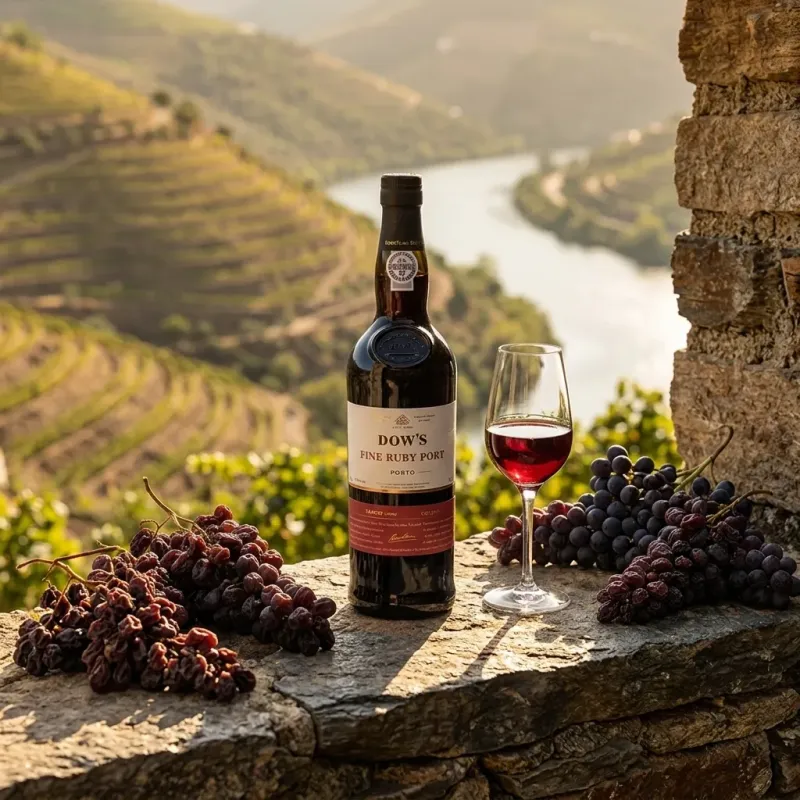
A classic and vibrant Port wine produced by one of the most prestigious historic houses in the Douro Valley. Fine Ruby is a blend of young, fruit-forward wines aged for an average of three years in large oak casks. It stands out for Dow’s characteristic house style: slightly drier and more structured than other Rubies, while retaining all the intensity and freshness of red and black fruit.
In the glass, it presents a **very intense and brilliant ruby red color**, deep with lively garnet reflections. On the nose, it unfolds an aromatic explosion of **very ripe black and red fruit** (such as cherries, blackberries, blueberries, and cassis), accompanied by light spicy notes, touches of licorice, and a subtle, very fresh vegetal and mineral background. On the palate, it is **full-bodied, vibrant, and deeply fruity**, with a firm structure of soft tannins and natural sweetness well integrated with its alcoholic warmth, leaving a long, intense, and ultimately fresh finish with a lingering reminder of cherry compote and chocolate.
The star pairing: Dark chocolate desserts, brownies, or cocoa truffles during Halloween night or Castanyada. The vibrant fruit of the Port cuts through the richness of dark chocolate while the wine’s sweetness balances the bitterness of cocoa.
Other autumn options: Pairs fantastically with chocolate or quince paste panellets, a board of cured sheep’s milk cheeses or blue cheeses, or even traditional autumn dishes like red berry jam with wood spices or game meats. Serve ideally between 14 °C and 16 °C.
Botrytized sweet wines (Botrytis Cinerea / Noble Rot)
One of viticulture’s miracles. In certain humid regions, the fungus Botrytis Cinerea attacks the grape skins, evaporating the water and concentrating sugars and acidity without spoiling the fruit.
Iconic examples: Sauternes (France) or Tokaji (Hungary).
Aroma and taste: vibrant acidity with honeyed sweetness, flavors of dried apricots, candied orange peel, and honey.
Our selection: CHÂTEAU VIOLET-LAMOTHE
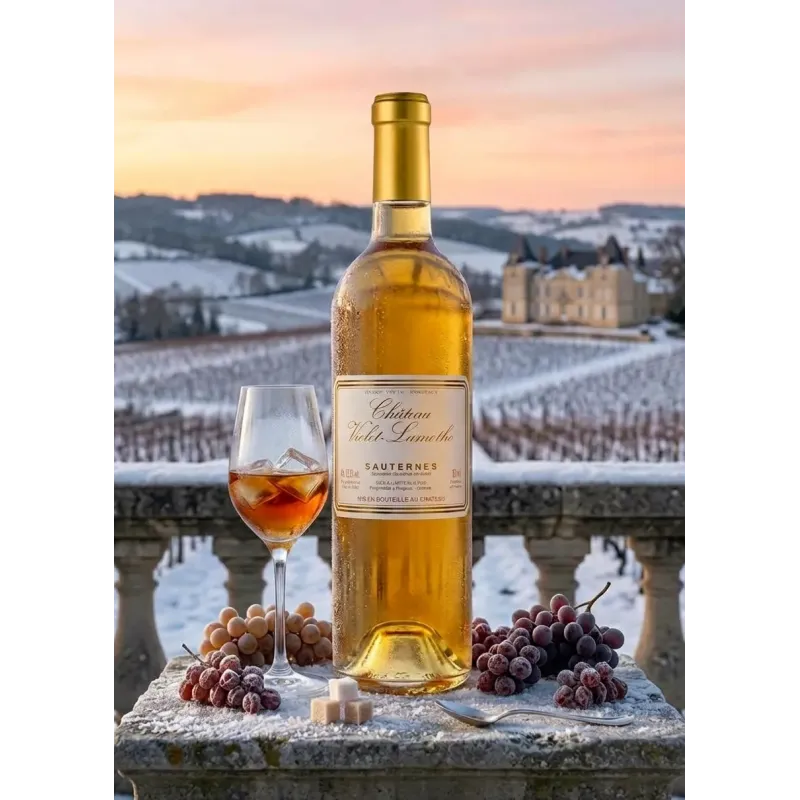
One of the greatest exponents of noble rot sweet wines (Botrytis Cinerea) from the legendary Sauternes region in Bordeaux. Made primarily with Sémillon and Sauvignon Blanc, this wine is a true marvel of balance, where the natural concentration of sugars harmonizes with vibrant acidity, giving it elegance, freshness, and extraordinary longevity.
In the glass, it shines with an intense and beautiful **brilliant gold color with honey and amber reflections**. On the nose, it offers an extremely complex and seductive aroma, highlighting notes of **candied orange peel, dried apricots, orange blossom honey, and white flowers**, accompanied by nuances of sweet spices, vanilla, and a very fresh mineral and vegetal background. On the palate, it is **viscous, honeyed, and deeply elegant**, with a rich, enveloping sweetness maintained in perfect balance thanks to a vibrant citrus acidity that lifts it up and prevents any cloying sensation, leaving an extremely long and persistent finish with hints of ripe stone fruit, caramel, and honey.
The star pairing: Foie gras, La Cuna pâté, or soft and blue cheeses (like Roquefort or Gorgonzola). The contrast between the salinity or fat of these products and the acidic sweetness of Sauternes is one of the most sublime combinations in world gastronomy.
Other autumn options: Matches wonderfully with lemon, orange, or coconut panellets, apple or pear puff pastry tarts, or a traditional spiced pumpkin sponge cake or pie. Serve ideally very chilled, between 8 °C and 10 °C.
Ice wines (Eiswein / Icewine)
These are made from grapes allowed to freeze on the vine at temperatures around -7 °C or -8 °C. When pressing the frozen grapes, the water remains trapped as ice, yielding an extremely concentrated must.
Our selection: GRAMONA VI DE GLASS
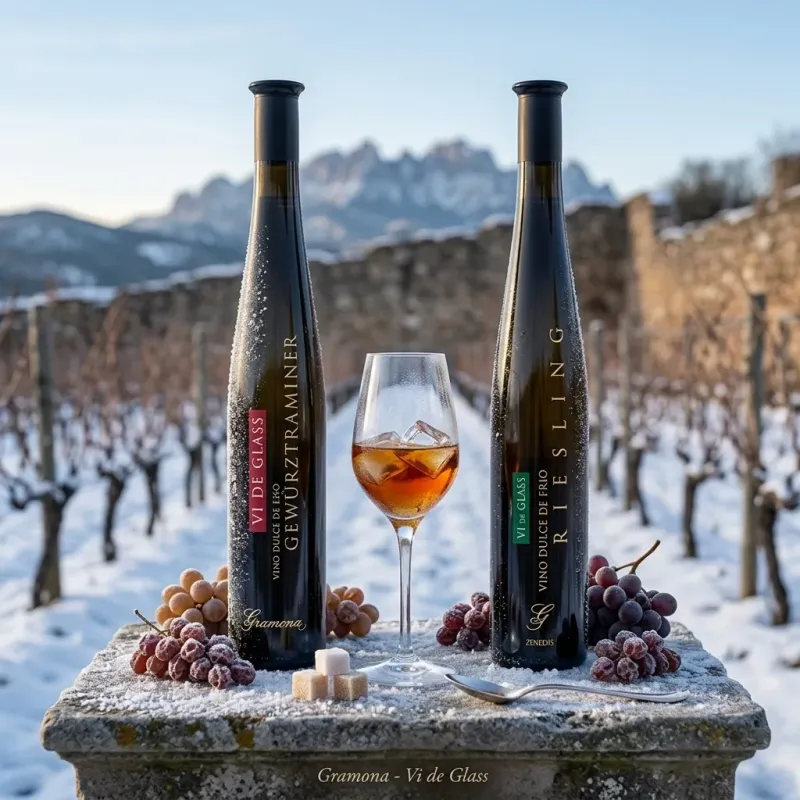
Gramona’s Vi de Glass wines are among the most innovative and elegant creations from the Gramona winery in Penedès. Inspired by traditional Central European ice wines (Eiswein), they are crafted through chamber cryoconcentration where the must is partially frozen to extract a pure concentration of sugars and aromas. The result is two sweet wines with great aromatic depth, expressive character, and vibrant natural acidity that makes them incredibly fine, elegant, and light on the palate.
Vi de Glass Gewürztraminer:
In the glass, it presents a lovely **straw-yellow color with golden reflections**, very brilliant and of fine density. On the nose, it is a true aromatic explosion of extraordinary frankness, highlighting perfumes of **passion fruit, lychee, rose petals, and candied orange peel**, wrapped in a subtly spiced and honeyed background. On the palate, it has a **smooth, friendly, and enveloping** entry, with a fruit-forward sweetness impeccably balanced by fresh acidity that prolongs its length, leaving a long, highly perfumed, and elegantly floral aftertaste.
Vi de Glass Riesling:
In the glass, it glows with a **lemon-yellow color with steely tones**, clean and very lively. On the nose, it offers a more citrus-forward, fresh, and mineral profile, standing out with aromas of **green apple, grapefruit, orange blossom, and apricot**, accompanied by subtly hydrocarbon and mineral notes characteristic of the variety. On the palate, it stands out for a **crisp and vibrant acidity** that cuts through the sweetness with millimeter precision, offering a palate entry of great freshness, balance, and an extremely clean, citrusy, and persistent finish.
The star pairing: Lemon, orange, coconut, or candied fruit panellets. The citrus freshness and floral aromas of these wines harmonize perfectly with the fruity and citrus nuances of autumn marzipan. Creamy and goat cheeses: Excellent companions for soft goat cheeses, artisanal Tou dels Til·lers cheese, or delicate pâtés. Autumn desserts: Ideal with apple tart, pear tatin, lemon meringue pie, or fine pastries. Serve very chilled, between 6 °C and 8 °C, to enjoy their maximum expression of freshness and aromas.
How to serve and store sweet wine to enjoy it to the fullest
To make the experience perfect, keep these three practical sommelier tips in mind:
- Serving temperature: Avoid serving sweet wine too warm, as the alcohol and sugar will stand out excessively. The ideal temperature usually ranges between 8 °C and 12 °C depending on the type of wine (cooler for muscats and slightly warmer for intense fortified wines like Port).
- The right glass: Use medium-sized glasses or tasting glasses with a slightly tapered rim to concentrate aromas.
- Storage once opened: Thanks to their sugar and alcohol concentration, sweet wines keep much better than dry wines. Once opened and tightly capped in the fridge, they can easily last between 2 weeks and several months in the case of fortified wines.
Tip from the Vinalium Manresa team: If you have an old bottle of sweet wine saved away, try serving it alongside an appetizer with cured cheeses or pâté before lunch. You’ll be amazed at how it changes the experience!
Frequently Asked Questions about Sweet Wines (FAQ)
1. What is the most traditional wine for Castanyada?
Traditionally in Catalonia, Castanyada is accompanied by Moscatell, Mistela, or Sweet Garnatxa. These are wines deeply rooted in our land that pair perfectly with the texture of panellets and roasted chestnuts.
2. Is sweet wine only meant for dessert?
No! Although it is the best-known pairing, sweet wines are excellent for accompanying savory appetizers, pâtés, foies, and a wide selection of creamy or blue cheeses.
3. Where can I buy quality sweet wines online?
At our online store Wonderful Wines you will find a curated selection of sweet wines from our land and around the world, specially chosen by our sommelier to guarantee the best value for money.
Find your ideal sweet wine at Wonderful Wines
Whether it’s to enjoy an autumn evening by the fireplace, to offer a special treat to your guests for Castanyada, or to give an unforgettable gift, sweet wine is an option full of warmth and elegance.
We invite you to discover our special seasonal selection at the Wonderful Wines online store or to come visit us at our physical shop Vinalium Manresa, where we will gladly advise you to find the bottle that best fits your taste.
Leave a Reply